



The OECD Should Be Reclaimed, Not Abandoned

By Kim Ruhl and Pierre Yared
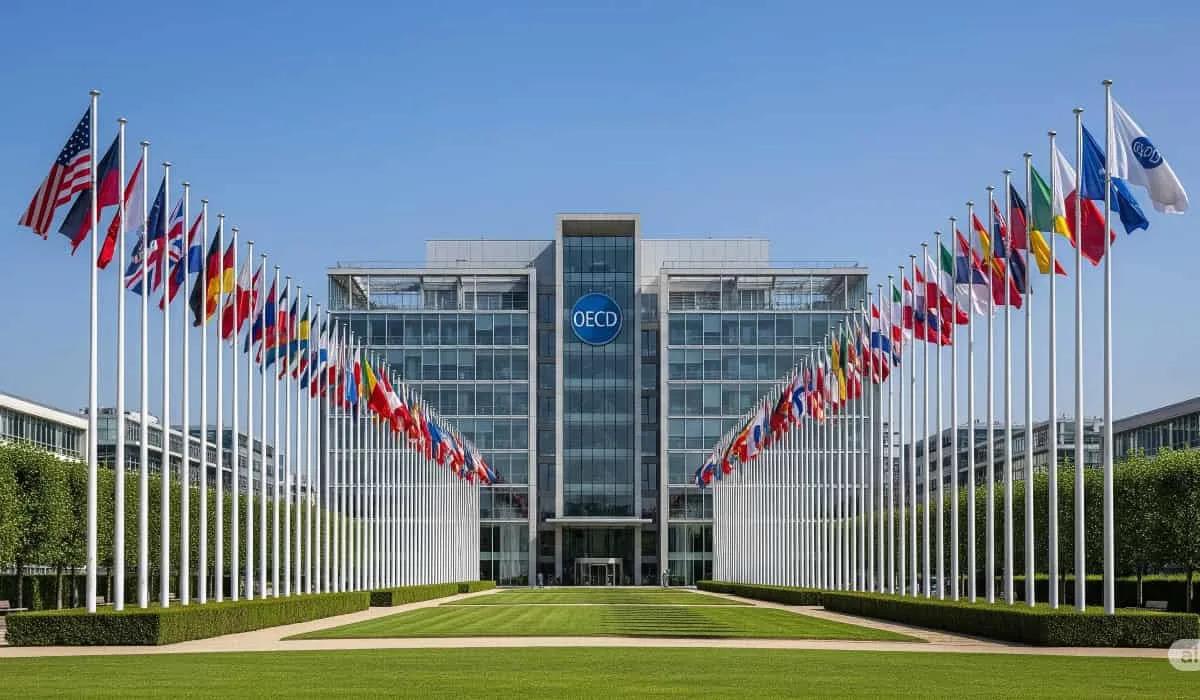
NEW YORK—On September 30, the OECD marked the 65th anniversary of its founding. Like many other aging international organizations, it has developed a taste for mission creep, as we witnessed firsthand as former delegates there.
That is why some US policymakers want to reduce or eliminate funding for the organization. But walking away from the OECD would mean abandoning capabilities that are becoming ever more important in America’s economic competition with China.
The OECD’s membership is composed of market democracies, and it possesses asophisticated statistical apparatus and decades of experience coordinating economic policy among the United States and its allies.
These attributes make the OECDall the more valuable at a time when economics and national security increasingly overlap.
The trouble is that the mandate of the OECD’s Economic Policy Committee, which for decades concentrated on economic surveillance and growth-promoting policies, was widenedin 2013 to pursue “balanced and sustainable economic growth with due attention to social and environmental consequences.”
Since then, the organization has built programs around gender budgeting, environmental justice, social mobility, and “Beyond GDP.”
Turning the OECD into a mini-United Nations with a focus on economics is not a strategy for relevance.Instead, the organization should make the most of its comparative advantage by building on its legacy.
The OECD arose from the organization that administered the Marshall Plan, and evolved into a forum forpolicy coordination around common economic interests. To that end, it helped establish reliable and internationally comparable statistics.
After the 1973 oil shock, the International Energy Agency (IEA) was created within the OECD framework to providegovernments with the data and analysis to prepare for energy disruptions. In 1981, the OECD addressed concerns about duplicative cross-border chemical testing by creating the Mutual Acceptance of Data system, which required participating countries to accept safety tests conducted under common standards.
Competition with China increasingly depends on issues that straddle economics and national security: critical minerals, semiconductors, drones, shipping, energy, pharmaceuticals, and other dependencies.A refocused OECD could support members’ efforts to counter China economically.
The IEA offers a model. AfterChina’s 2025 rare-earth export controls disrupted manufacturing supply chains and forced some European auto-parts plants to suspend production,it now monitors critical-mineral markets and conducts tabletop exercises to ensure that members are prepared for emergencies.
The US has the leverage to steer the OECD back to its core mission. Americais responsible for 18% of the OECD’s core Part I budget, more than double the share of the next-largest contributor, Germany. Rather than simply withdraw, the US could make continued support conditional on a narrower and more useful mission.
That will require four main reforms. First, the OECD should pause further expansion and reconsider the participation of non-members in its economic-policy discussions. China may be a necessary subject of OECD analysis, but that does not mean it must participate in discussions intended to coordinate policy among market democracies.
Second, the organization must refocus on economics-a shift that is already underway. In 2026, the Economic Policy Committee’s mandate was revised under US President Donald Trump’s administrationto promote “the highest balanced, sustainable, and stable economic growth in market-based democracies.” The rest of the OECD should take this aim seriously.
Third, redirecting itsresources toward supply chains and economic security would make the OECD’s existing infrastructure significantly more valuable. Its Inter-Country Input-Output tables mapped production relationships across 80 countries and 50 industries in 2025.
By contrast, the US Bureau of Economic Analysis produces annual input-output accounts for 71 industry categories in the US and benchmark tables with 402 industries. Policymakers need more granular industry data to identify chokepoints in supply chains, assess whether substitutes exist, and predict how quickly production could be shifted elsewhere.
While no individual government can easily assemble this information on its own, the OECD can-so long as it spends its current budget more efficiently. For example, substantial resources go into producing around two dozen country surveys annually that duplicate work already done by the International Monetary Fund, central banks, governments, and the private sector.
They should instead be redirected toward comparable cross-country data, supply-chain mapping, and the measurement of subsidies and dependencies, all of which the OECD is uniquely positioned to provide.
Lastly, the OECD should use its ability to create legal instruments-270 currently are in force, covering areas such as investment, exports, and competition-to promote economic security. Cooperation on investment screening and supply chains can begin among a smaller group of members, which the OECD can then develop into common standards.
The OECD was created for a world in which America’s economic and strategic interests were inseparable. Sixty-five years later, they have never been so closely aligned.
Kim Ruhl, a former member of the White House Council of Economic Advisers (2025–26), is Professor of Economics at the University of Wisconsin-Madison.Pierre Yared, a former acting chair of the White House Council of Economic Advisers (2025–26), is Professor of International Business and Vice Dean for Executive Education at Columbia Business School and a senior fellow at the Council on Foreign Relations.
Copyright: Project Syndicate, 2026.